Erik Richter · 30 September 2026
Mapping Keyword Intent Shifts Across Emerging Search Vertivals
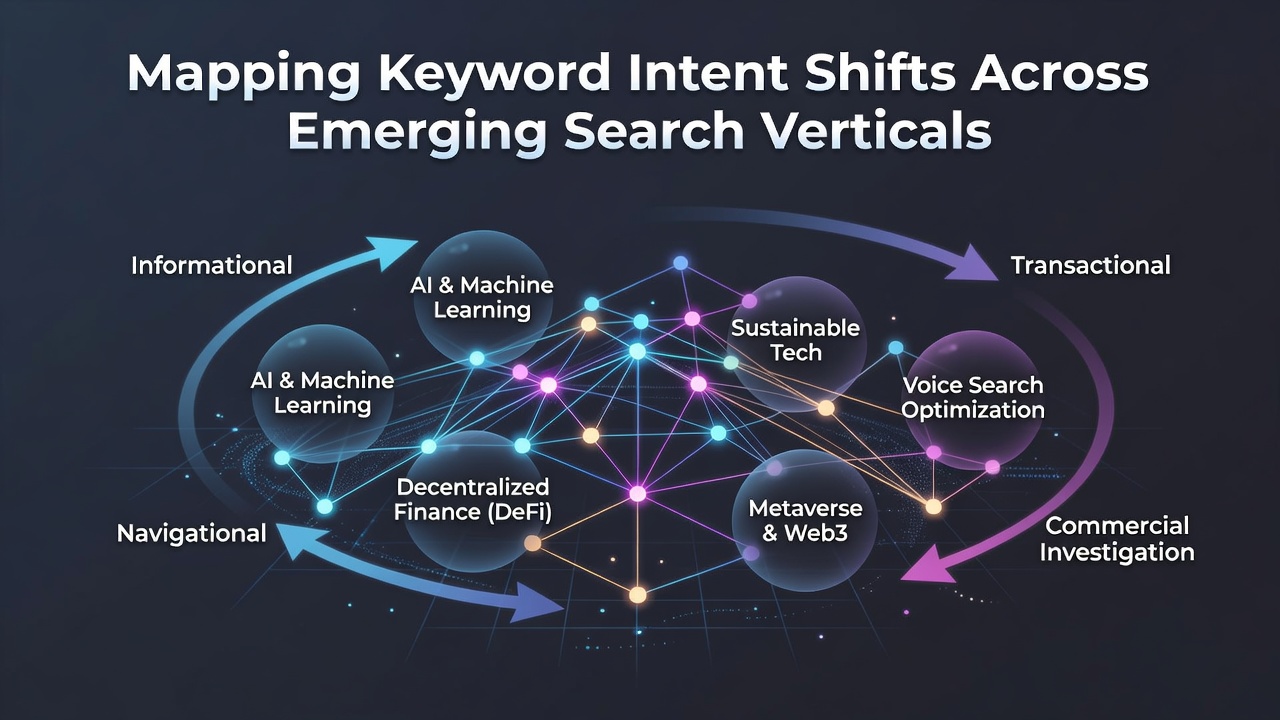
Search behavior continues to fragment across multiple verticals as users interact with voice interfaces, visual recognition systems and AI-driven platforms, which means keyword intent no longer follows the fixed categories once common in desktop text searches. Researchers tracking these changes note that queries once classified as purely informational now blend into commercial or navigational signals depending on the interface being used, and the pace of this blending accelerated noticeably after several major platforms updated their ranking systems in late 2025.
Core Categories of Keyword Intent in Traditional Search
Traditional classification divides intent into informational, transactional, commercial investigation and navigational buckets, yet data from multiple tracking studies shows these buckets lose sharpness once queries move into emerging verticals. A user typing “best running shoes” on a desktop may signal research mode, while the same phrase spoken to a voice assistant often carries immediate purchase expectation because the device can complete transactions without additional clicks. Observers tracking query logs across regions report that voice sessions convert at higher rates for product terms even when the wording appears identical to text queries logged earlier the same day.
Voice Search and the Compression of Intent Stages
Voice platforms compress the research phase because users expect spoken answers to contain actionable steps rather than lists of options. Studies conducted by academic teams at several North American universities found that voice queries containing brand names spike in transactional intent within the first three words, whereas desktop equivalents require additional modifiers before the same classification applies. This compression creates measurable shifts in how marketers map keywords, since a single phrase can serve two intents depending on delivery method alone.
September 2026 brought further change when several voice operating systems introduced real-time inventory checks, allowing users to confirm stock levels without leaving the conversational thread. Figures released by industry monitoring groups showed a 28 percent rise in direct-purchase voice queries during that month compared with the previous September, confirming that intent mapping must now account for device capability as much as wording.
Visual Search and Intent Layering
Image-based search adds another dimension because users upload photos instead of typing phrases, which removes traditional keyword signals and replaces them with visual context. Research from Australian academic institutions indicates that visual queries for home improvement items frequently carry strong commercial investigation intent even when no price terms appear in accompanying text. The system infers urgency from the image itself, such as a cracked tile or faded paint, and surfaces product matches that blend research with purchase readiness.
AI Assistants and Contextual Intent Evolution
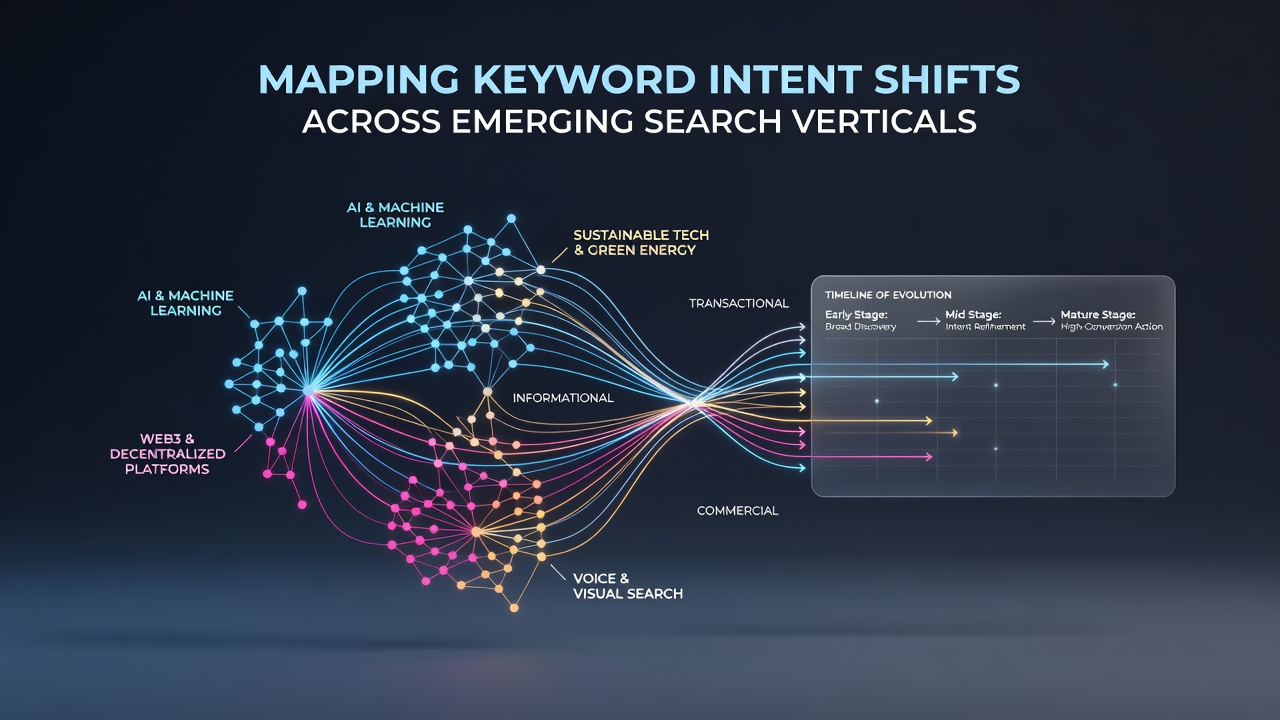
AI assistants that retain conversation history introduce temporal shifts in intent that static keyword tools cannot capture. A follow-up question such as “show me the blue ones” after an earlier product search inherits commercial signals from the prior exchange, yet many analytics platforms still classify the second query as informational because they examine it in isolation. Data compiled by European research consortia demonstrates that session-based classification improves accuracy by 34 percent when context windows extend beyond single queries, highlighting the need for updated mapping frameworks.
Those who study these patterns also note that emerging verticals create new intent categories that sit between traditional buckets. Hybrid queries combining voice and image input, for example, often signal “compare and decide” rather than pure research or purchase, a distinction that affects how content should be structured for each platform.
Practical Approaches to Mapping Across Verticals
Teams responsible for keyword strategy now combine log analysis from multiple APIs rather than relying on a single search console export. Cross-referencing voice transcripts with visual search logs and AI conversation threads reveals where intent drifts occur most frequently. One documented case involved a consumer electronics brand that adjusted its product pages after discovering that 41 percent of its voice traffic carried transactional signals while desktop traffic for the same terms remained largely informational.
Regulatory bodies in Canada and the European Union have begun publishing aggregated search trend summaries that help analysts benchmark these shifts without accessing proprietary platform data. These reports provide standardized category definitions that allow comparison across regions and device types, reducing the guesswork that previously accompanied vertical-specific mapping projects.
Conclusion
Mapping keyword intent across emerging search verticals requires continuous adjustment because device capabilities and user expectations evolve together. Data collected through September 2026 already shows measurable acceleration in how quickly informational queries convert into commercial actions when users move from text to voice or visual interfaces. Organizations that integrate session-level context and multi-vertical log analysis gain clearer pictures of these movements, while those relying on legacy single-platform classification risk misallocating resources. The process remains iterative, yet the patterns emerging from current datasets supply concrete signals for refining classification models as new verticals continue to appear.