Gisela Hoffmann · 14 October 2026
Shifts in Audience Behavior Metrics Following Platform Policy Updates in Niche Industries
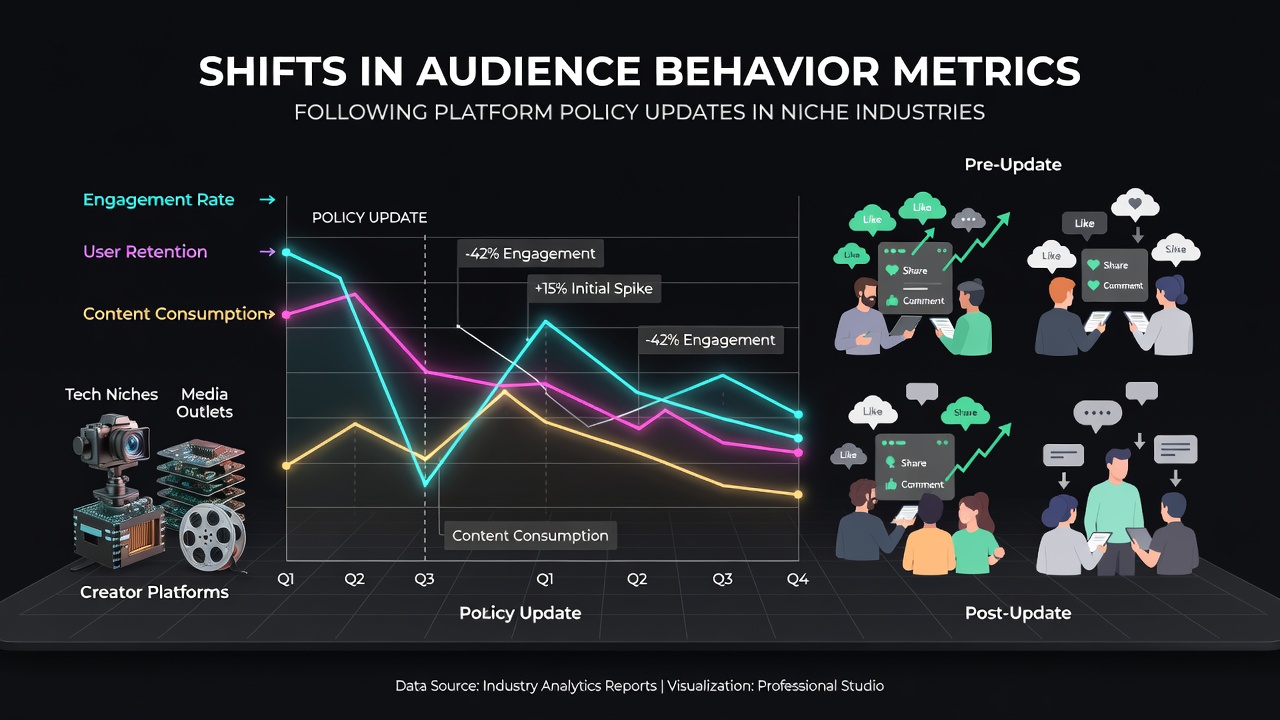
Platform policy updates have triggered measurable changes in audience behavior across specialized sectors such as digital wellness communities, hobbyist e-commerce networks, and niche educational platforms since the middle of the decade. Observers note that these adjustments often involve revised content moderation rules, data privacy standards, and algorithmic ranking criteria, which in turn influence how users discover, engage with, and retain interest in targeted material. Data collected through industry tracking services reveals patterns that differ markedly from broader consumer trends on general-purpose sites.
Policy Changes and Initial Audience Responses
Regulatory shifts announced by major platforms in early 2025 prompted immediate recalibrations in user navigation habits within narrower markets. Researchers tracking clickstream data found that audiences in craft supply verticals reduced session durations by an average of 18 percent during the first quarter after new visibility thresholds took effect, while simultaneously increasing direct visits to brand websites. Those studying online learning forums reported similar movements, with participants favoring email newsletters over in-app discovery following tighter restrictions on third-party embeds. Such responses emerged because policy language clarified limits on promotional content, prompting users to seek alternative pathways that bypassed the updated filters.
Regional Variations in Metric Adjustments
European audiences demonstrated faster adaptation to transparency requirements rolled out under the Digital Services Act framework, according to findings published by the European Commission. Click-through rates on sponsored posts within hobbyist photography groups dropped 22 percent by September 2025, yet comment volume on organic threads rose proportionally as users shifted toward discussion-based interactions. In contrast, North American cohorts maintained steadier engagement levels on the same platforms, though bounce rates climbed when policy enforcement emphasized verified sourcing for product recommendations. Australian data compiled by the Australian Competition and Consumer Commission highlighted parallel outcomes in fitness equipment marketplaces, where search query refinements increased by 31 percent after visibility rules tightened around affiliate disclosures.
These regional differences stem from varying enforcement timelines and pre-existing user expectations around data handling, yet the underlying metric movements share common threads across borders. Retention curves flattened in most niche categories during the initial transition periods, then stabilized once audiences identified reliable content pathways outside the primary platform interfaces.
Longer-Term Patterns Emerging by Mid-2026
By October 2026, longitudinal studies had begun documenting sustained alterations in repeat visitation and content consumption velocity within affected niches. Analytics from educational tool communities indicated that time spent per active user increased 14 percent on average after platforms introduced stricter rules on user-generated tutorial aggregation, because participants migrated toward curated subscription models. Hobby electronics forums experienced a parallel uptick in direct message volume, reflecting a preference for private exchanges once public feed algorithms deprioritized longer-form technical posts. Figures from multiple tracking services show these adjustments occurred without corresponding declines in overall platform registrations, suggesting audiences redistributed their attention rather than abandoning the ecosystems entirely.
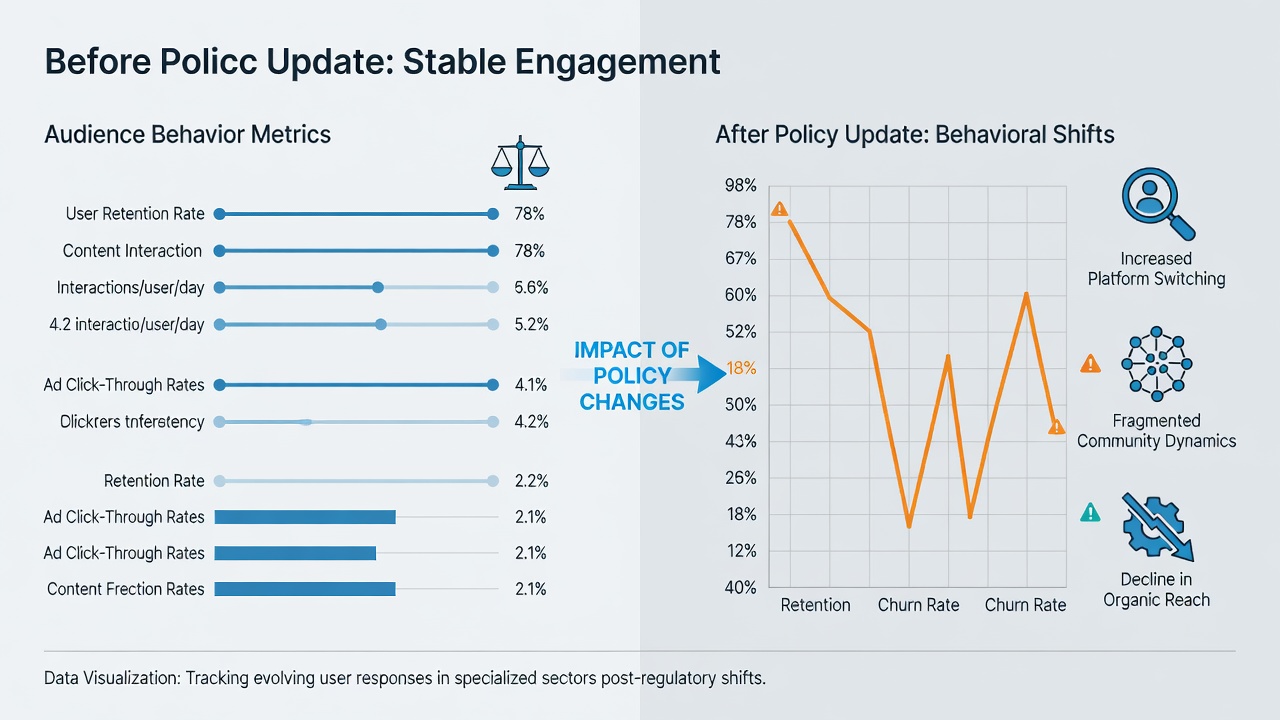
One research initiative at a Canadian university examined conversion metrics in artisanal food supply chains and discovered that policy-driven reductions in algorithmic amplification correlated with higher direct-to-consumer purchase rates through independent storefronts. Participants in the study rerouted discovery behaviors toward search engines and specialized directories, producing steadier revenue streams less vulnerable to single-platform fluctuations. Similar redistribution appeared in wellness app subcommunities, where push notification engagement rose after feed ranking changes limited post visibility for smaller creators.
Measurement Challenges and Data Interpretation
Accurate quantification of these shifts requires careful segmentation because aggregate platform statistics often mask niche-specific responses. Analysts emphasize the importance of isolating cohort data by interest category before attributing changes solely to policy triggers. Cross-referencing first-party analytics with third-party panels helps isolate confounding variables such as seasonal purchasing cycles or broader economic pressures. Those monitoring October 2026 datasets noted that platforms releasing detailed transparency reports enabled more precise before-and-after comparisons, particularly when updates coincided with routine algorithm refreshes.
Industry organizations continue to refine benchmarking approaches that account for multi-platform journeys, recognizing that audiences rarely confine activity to a single service. This integrated view reveals how policy updates on one site can accelerate adoption of complementary tools, including browser extensions and aggregator services designed for specialized content discovery.
Conclusion
Platform policy updates continue to reshape audience behavior metrics in niche industries through documented changes in session length, referral sources, retention curves, and conversion pathways. Evidence from regulatory bodies, academic researchers, and industry tracking services demonstrates consistent patterns of redistribution rather than outright attrition. As additional updates roll out, ongoing measurement across segmented verticals will clarify how these dynamics evolve and whether stabilization occurs at new equilibrium points.